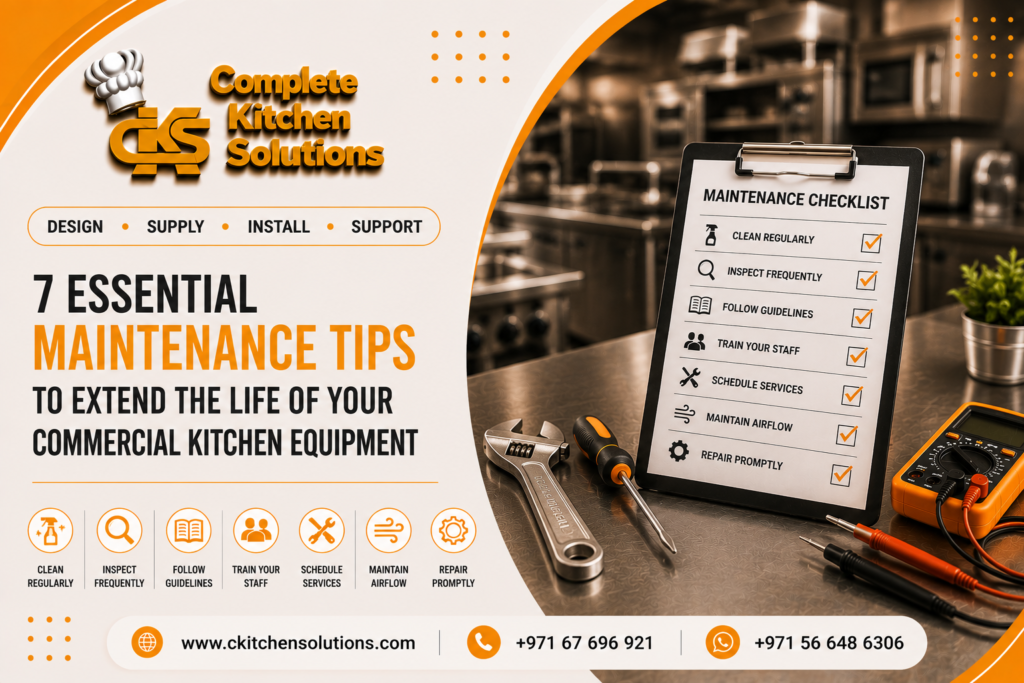
Investing in high-quality commercial kitchen equipment is one of the most important decisions for any restaurant, hotel, resort, catering facility, bakery, or foodservice operation. These essential assets play a crucial role in maintaining productivity, food quality, and customer satisfaction. However, even the most advanced equipment can experience reduced performance and costly breakdowns if proper maintenance is neglected. Implementing effective commercial kitchen equipment maintenance practices not only extends equipment lifespan but also improves operational efficiency and reduces long-term expenses. At Complete Kitchen Solutions, we help businesses maximize the value of their equipment investments through expert guidance, quality products, and reliable support services.
One of the most effective ways to protect commercial kitchen equipment is through consistent cleaning. Grease, food residue, dust, and debris can accumulate on equipment surfaces and internal components over time, leading to reduced efficiency and increased wear. Proper cleaning helps maintain performance while preventing contamination and hygiene issues.
Routine cleaning schedules should be followed for cooking equipment, refrigeration units, food preparation machines, and ventilation systems. Maintaining clean equipment not only supports food safety standards but also reduces the likelihood of unexpected breakdowns. At Complete Kitchen Solutions, we emphasize preventive care as a critical component of successful kitchen operations.
Frequent inspections help identify minor issues before they become costly repairs. Checking equipment for unusual noises, leaks, loose connections, damaged seals, or signs of wear allows businesses to address problems early and avoid major disruptions.
Regular inspections of commercial kitchen equipment ensure that all components continue to operate efficiently. Proactive monitoring also helps maintain consistent food production and service quality. Businesses that prioritize inspections often experience fewer equipment failures and lower maintenance costs over time.
Every piece of equipment is designed with specific operating and maintenance requirements. Following manufacturer recommendations helps ensure optimal performance and prevents unnecessary damage caused by improper use.
Maintenance schedules, cleaning procedures, and service intervals provided by manufacturers should always be followed. These guidelines are developed to maximize equipment lifespan while maintaining efficiency and safety. Complete Kitchen Solutions assists clients in understanding proper equipment care to achieve long-term operational reliability.
Even the highest-quality equipment can experience premature wear if employees are not properly trained. Incorrect operation, overloading, misuse, or neglect can significantly reduce equipment lifespan and increase repair costs.
Providing staff with adequate training on the correct use of commercial kitchen equipment helps prevent avoidable damage. Employees should understand equipment functions, cleaning procedures, safety practices, and daily maintenance responsibilities. Through proper training and awareness, businesses can improve operational efficiency while protecting valuable assets.
Preventive maintenance is one of the most effective strategies for extending equipment life. Professional technicians can identify hidden issues, replace worn components, calibrate systems, and ensure equipment operates at peak performance.
Routine servicing helps reduce unexpected downtime and prevents minor problems from developing into major failures. Investing in preventive maintenance services can significantly lower repair expenses and improve equipment reliability. At Complete Kitchen Solutions, we provide support and maintenance recommendations that help businesses maintain efficient and dependable kitchen operations.
Ventilation systems play a critical role in protecting kitchen equipment and maintaining a safe working environment. Poor airflow can cause equipment to overheat, reduce efficiency, and place unnecessary stress on critical components.
Regular maintenance of ventilation systems, exhaust hoods, and air filters helps ensure proper airflow throughout the kitchen. Clean ventilation systems also improve indoor air quality and contribute to a safer workplace. Maintaining effective airflow supports the overall performance of commercial kitchen equipment while helping businesses avoid costly repairs.
Ignoring minor equipment issues often leads to more significant and expensive problems in the future. Small leaks, unusual sounds, inconsistent temperatures, or reduced performance should never be overlooked.
Prompt repairs help prevent further damage and minimize operational disruptions. Businesses that address maintenance concerns quickly often experience longer equipment lifespan and improved reliability. Complete Kitchen Solutions encourages proactive repair strategies that protect equipment investments and support uninterrupted operations.
Proper commercial kitchen equipment maintenance offers numerous long-term benefits. Well-maintained equipment operates more efficiently, consumes less energy, and delivers consistent performance. Reduced downtime helps businesses maintain productivity, while lower repair costs contribute to improved profitability.
Maintenance also supports compliance with food safety standards by ensuring equipment remains clean, functional, and reliable. For hospitality businesses, maintaining high-quality kitchen operations directly impacts customer satisfaction and overall business success.
At Complete Kitchen Solutions, we understand that equipment maintenance is not simply about preventing breakdowns. It is about protecting investments, improving efficiency, and supporting long-term operational growth.
The success of any commercial kitchen depends heavily on the reliability and performance of its equipment. By implementing proper commercial kitchen equipment maintenance practices such as regular cleaning, inspections, staff training, preventive servicing, ventilation maintenance, and timely repairs, businesses can significantly extend equipment lifespan and improve operational efficiency.
As a trusted provider of commercial kitchen solutions, commercial kitchen equipment, and maintenance support services, Complete Kitchen Solutions helps restaurants, hotels, resorts, bakeries, catering facilities, and foodservice businesses maximize equipment performance and long-term value. With the right maintenance strategy, businesses can reduce costs, improve productivity, and ensure their kitchen operations continue to perform at the highest level for years to come.
